M2M SIM Cards in India: A Complete IoT Guide
A complete guide to machine-to-machine (M2M) SIM cards for IoT in India — covering consumer vs M2M comparison, 13-digit numbering, DoT KYC rules, network selection, and an 8-factor deployment checklist.
Exelon Circuits Team
IoT & Embedded Engineering Specialist
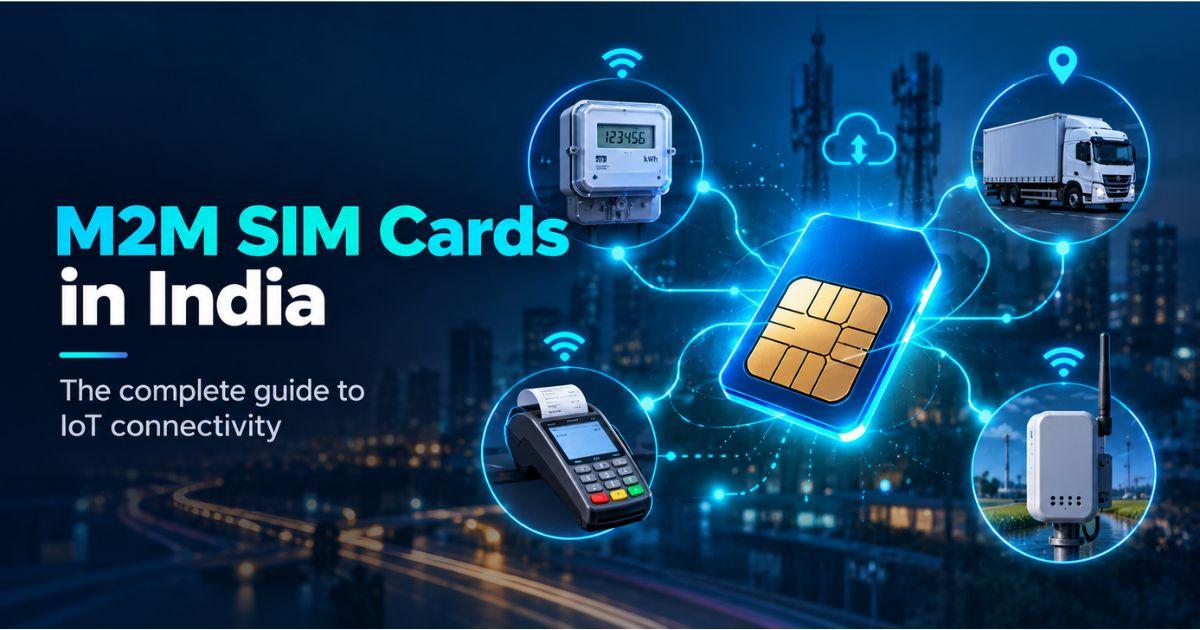
Smart meters report energy use, delivery trucks share their location and POS machines process payments, all without anyone touching a phone. Behind many of these connections is an M2M SIM card.
Machine-to-machine (M2M) communication is the backbone of the Internet of Things (IoT). This guide explains what an M2M SIM is, how it differs from a regular SIM, what Indian businesses need to know and how to choose the right connectivity for your devices.
What Is an M2M SIM Card?
An M2M SIM is a SIM card built for devices, not people. A regular SIM goes into a smartphone and is designed for calls, messaging and browsing. An M2M SIM goes into a GPS tracker, smart meter, POS terminal or industrial sensor. It is designed to keep that device connected around the clock, often in remote places or harsh conditions, with little or no manual handling.
- M2M SIMs are purpose-built for autonomous machine endpoints operating continuously in unattended environments.
- Industrial form factors ensure resilience against extreme heat, shock, vibration, and moisture.
M2M SIM vs Regular SIM
Key operational and hardware differences between consumer and machine cellular connectivity:
| Feature | Regular Consumer SIM | M2M SIM |
|---|---|---|
| Used in | Phones and tablets | Trackers, meters, POS, sensors, gateways |
| Data use | High, varied | Usually low and predictable |
| Management | One SIM at a time | Thousands of SIMs from one dashboard |
| Durability | Standard plastic card | Industrial grades for heat, vibration and moisture |
| Form factors | Nano, micro, eSIM | Standard, eSIM and solder-on MFF2 chips |
| Lifespan | A few years | Often designed for 10 years or more in the field |
- Industrial MFF2 chip form factors eliminate socket vibration failures in harsh field deployments.
- M2M data pooling prevents paying for unused individual data allowances across large device fleets.
How an M2M SIM Works
Machine-to-machine communication follows a 4-step data pipeline:
- End-to-end data pipelines stream sensor telemetry directly into central cloud analytics platforms.
- Remote over-the-air management allows instant provisioning and diagnostic tracking without physical access.
M2M SIMs in India — Regulatory & Network Essentials
Operating connected IoT hardware in India involves specific regulatory frameworks and network conditions:
- India mandates distinct 13-digit numbering to segregate machine telemetry from consumer mobile traffic.
- Bulk enterprise KYC through M2M providers streamlines compliance for factory-assembled connected devices.
Key Features of M2M SIMs
Core technical capabilities designed for unattended machine-to-machine deployments:
Benefits for Businesses
Deploying purpose-built M2M connectivity delivers strategic operational advantages:
- Private APN routing isolates critical infrastructure telemetry from public internet threats.
- Real-time diagnostic alerting identifies network degradation before remote field devices drop offline.
Where M2M SIMs Are Used
How to Choose the Right M2M SIM — 8 Critical Factors
Evaluate cellular connectivity providers against these 8 core criteria before deploying:
- Pair IMEI locking with private APNs to prevent stolen SIMs from being misused in unauthorized devices.
- Demand pooled bandwidth and REST API integration to connect SIM telemetry directly into internal ERP systems.
The SIM Is Only One Part of an IoT System
A reliable IoT product needs the right hardware, firmware, connectivity, cloud platform and dashboard working together. Many projects fail not because of the SIM, but because the device cannot handle weak signals, drains its battery or sends data no one can use. Plan the full system from the start.
Frequently Asked Questions
Build Your Connected Product with Exelon Circuits
Exelon Circuits designs electronics, embedded firmware and IoT platforms for businesses in Mangaluru, Udupi and across India. We help you choose the right connectivity, build reliable devices and create dashboards that turn device data into decisions.