1600 Number Series: What Banks, Insurers & Government Must Know
TRAI's 1600 number series gives banks, insurers, financial firms and government a verified caller identity for service calls. See who needs a 1600 number and how to get one.
Exelon Circuits Team
Enterprise Telecom & Integration Specialist
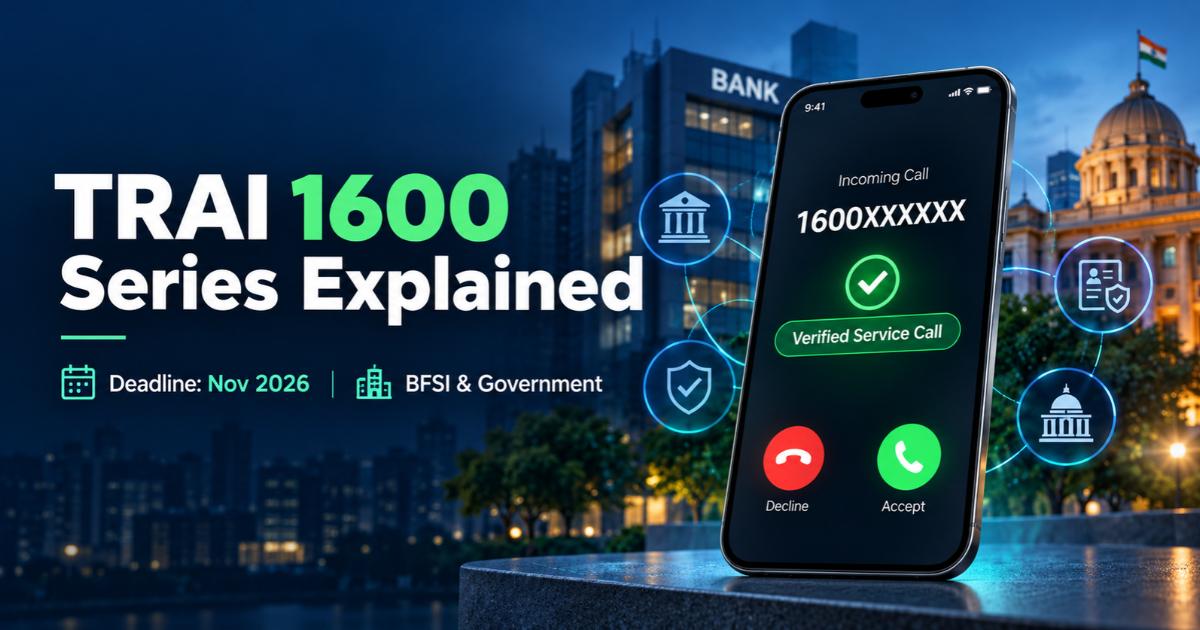
The 1600 number series is a TRAI-mandated phone number range that banks, insurers, financial services firms and government bodies must use for service and transactional calls. When a customer sees a call from a 1600 number, they know it comes from a verified, regulated institution, not a random 10-digit mobile.
This guide explains what the 1600 number series is, who must use it, which calls are allowed, how it compares with the 1601 and 140 series, and what your core banking, IVR and CRM systems need to change.
What Is the 1600 Number Series?
The 1600 number series is a caller identification range reserved for the banking, financial services and insurance (BFSI) sector and government organisations. It is used only for service and transactional voice calls, such as OTP verification, payment alerts, account updates and claim follow-ups.
1600 numbers are allotted only after verification, so a call from this series signals a genuine regulated caller.
- The 1600 number series is only for BFSI and government service calls.
- Verified-only allotment makes impersonation much harder.
Why Did TRAI Introduce the 1600 Number Series?
Financial fraud calls cause some of the biggest losses for Indian consumers. Fraudsters call from ordinary mobiles, claim to be a bank or government office, and ask for OTPs, card details or remote access to a phone.
When real and scam calls look the same, customers either fall for scams or stop answering genuine calls. A verified 1600 number series fixes both problems.
Who Needs a 1600 Number?
Co-operative banks are included. Regions with dense co-operative banking, such as coastal Karnataka, should check that every branch and call centre has moved to a 1600 number.
| Sector | Examples |
|---|---|
| Banks | Public, private, co-operative and small finance banks |
| Insurance | Life, general and health insurers |
| Financial services | NBFCs, mutual funds, brokers, payment companies and other regulated entities |
| Government | Central and state departments and public sector bodies |
Utilities, courier and logistics companies use a different series: see our TRAI 1601 series guide.
- Banks (including co-operative banks), insurers, financial firms and government need a 1600 number.
- Utilities and logistics companies use the 1601 series.
1600 vs 1601 vs 140 Number Series
India now separates commercial calls by sector and purpose. Use this table to pick the right series:
| Number Series | Who Uses It | Type of Call |
|---|---|---|
| 140 | Any registered business | Promotional and marketing calls |
| 1600 | Banks, insurance, financial services and government | Service and transactional calls |
| 1601 | Utilities, courier and logistics | Service and transactional calls |
What Calls Can You Make From a 1600 Number?
Using a 1600 number for marketing defeats the purpose of the series and can put your allocation at risk.
| Allowed (service and transactional) | Not allowed (use 140 series) |
|---|---|
| OTP and transaction verification calls | Loan, card or insurance offers |
| Payment, EMI and premium due reminders | Cross-selling and upselling campaigns |
| Fraud alerts and suspicious activity checks | Any promotional call |
| Account, KYC and policy service updates | |
| Claim status and grievance follow-ups |
How to Get a 1600 Number in 5 Steps
- Audit every outbound call trigger before you apply.
- 1600 numbers are allotted through your telecom operator after verification.
What the 1600 Number Series Changes in Your Core Banking, IVR and CRM
Banks and insurers usually call from several systems: core banking or policy platforms for alerts, a CRM for collections and a dialer for sales. After moving to the 1600 number series, each must present the correct caller ID automatically.
Benefits of the 1600 Number Series
Frequently Asked Questions
Conclusion
The 1600 number series gives customers a simple way to tell genuine bank, insurance and government calls from scams. Moving early, with your IVR, dialer and CRM mapped correctly, protects your customers and keeps you compliant with TRAI.
Get Your Calling Systems 1600-Ready
Exelon Circuits helps banks, co-operative banks, insurers and government bodies in Mangaluru, Udupi and across India get IVR, dialer and CRM systems ready for the 1600 number series, with call logs that prove compliance.