TRAI 1601 Series: Eligibility, Rules & 2026 Deadline
A complete guide to TRAI's new 1601 series mandate — covering eligibility criteria for utilities and logistics, allocation rules, telephony integrations, and the 2026 compliance deadline.
Exelon Circuits Team
Enterprise Telecom & Integration Specialist
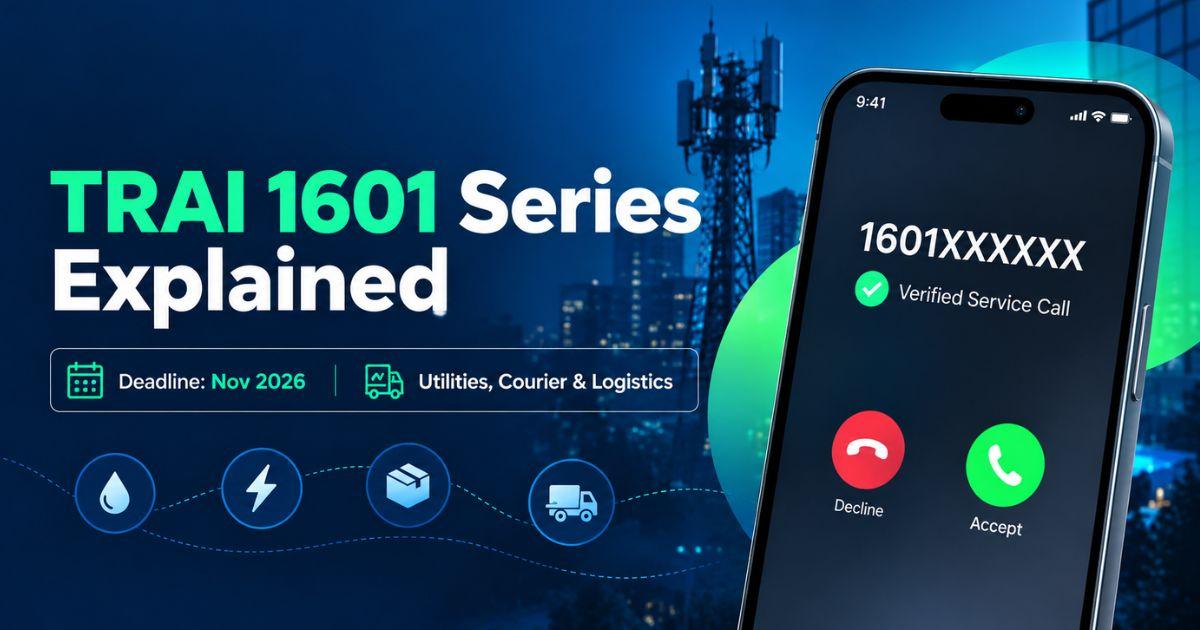
If your business makes delivery, billing or service calls to customers, TRAI's new 1601 series number rule affects you. On 10 August 2026, TRAI issued a Direction requiring eligible utility, courier and logistics companies to make service and transactional calls from dedicated 1601 numbers. Telecom operators must onboard eligible businesses within 90 days, which puts the target date around 8 November 2026.
This guide explains what a 1601 number is, who is eligible, how to get one and what your calling systems need to change.
Why TRAI Introduced the 1601 Series
Most people have received a call claiming to be from a courier company or the electricity board that turned out to be a scam. Fraudsters use ordinary 10-digit mobile numbers, so customers cannot tell a genuine service call from a fake one.
TRAI's answer is a dedicated number range for legitimate service calls. When a customer sees a call from a 1601 number, they know it comes from a verified organisation, not a random mobile number.
- Mandatory 1601 numbering separates legitimate enterprise service calls from 10-digit mobile scammers.
- Telecom operators must complete onboarding and migration within the 90-day regulatory window.
What Is a 1601 Series Number?
A 1601 series number is a telephone number reserved for service and transactional voice calls from verified businesses outside banking and government. It sits inside India's wider numbering framework for commercial calls:
| Number Series | Who Uses It | Type of Call |
|---|---|---|
| 140 | Any registered business | Promotional and marketing calls |
| 1600 | Banks, financial services, insurance (BFSI) and government | Service and transactional calls |
| 1601 | Utilities, courier and logistics (Phase I) | Service and transactional calls |
Keeping 1601 separate from 1600 stops important banking and government calls from mixing with delivery or billing calls from other sectors.
Who Is Eligible in Phase I?
The 1601 series is being rolled out in phases. Phase I covers two sectors:
Utilities
Courier and logistics
Banks, NBFCs, insurers and government bodies continue to use the 1600 series. More sectors, such as e-commerce, healthcare and education, may be added in later phases.
- Phase I is strictly designated for utilities and courier or logistics operators.
- Numbers are allocated directly to eligible businesses after TSP verification, never via intermediaries or aggregators.
How 1601 Numbers Are Allocated
TRAI has set clear rules for how these numbers reach businesses:
- Direct allocation strictly to verified businesses — aggregators and intermediaries cannot hold 1601 numbers.
- TSPs must complete onboarding and migration within the 90-day regulatory window.
What You Can and Cannot Use 1601 Numbers For
Allowed (service and transactional)
Not allowed
Mixing promotional calls into a 1601 number breaks your undertaking and can put your allocation at risk.
- 1601 numbers are strictly limited to operational updates, outage alerts, and service follow-ups.
- Mixing promotional or upselling campaigns into 1601 lines breaches your undertaking and risks revocation.
Benefits of a 1601 Number for Your Business
Operating on a verified 1601 series provides essential business and regulatory advantages:
- Customers recognise legitimate service calls instantly, driving up pickup rates.
- Eliminates brand impersonation risks by separating legitimate operational calls from 10-digit mobile spammers.
Preparation Checklist — 6 Steps to 1601 Compliance
Follow this 6-step checklist to prepare your calling operations:
- Audit all outbound calling triggers to route promotional calls through 140 and service calls through 1601.
- Initiate TSP verification immediately to avoid telecom operator queue bottlenecks.
What This Means for Your Calling Software
The technical side is where most businesses get stuck. A courier company might trigger delivery calls from its dispatch software, run collection reminders from a CRM, and run promotions from a separate dialer. After the 1601 rollout, each of these must use the right caller ID automatically.
That usually means:
- Automate caller ID selection across CRM, auto-dialers, and dispatch applications.
- Maintain immutable call logs to substantiate compliance during telecom regulatory audits.
Frequently Asked Questions
Get Your Calling Systems 1601-Ready
The 1601 deadline is weeks away. Exelon Circuits helps utility, courier and logistics businesses in Mangaluru, Udupi and across India update their IVR, CRM and dispatch software so every call goes out on the right number series, with the logs to prove it.